Acatenango Volcano Tours: Camp Facing an Erupting Fuego
Climb through coffee farms and cloud forest to a camp at 3,750 metres, where Fuego throws lava over the ridge through the night. Compare Acatenango volcano tours and hold a date with free cancellation.
Acatenango volcano tours are overnight hikes from Antigua that cost $57 to $240 per person and camp at about 3,750 m (12,300 ft), directly across from Volcán de Fuego. The walk to camp gains 1,576 m and takes 4 to 6 hours; the summit push the next morning takes 1 to 2 hours and the descent 2 to 3 hours. Fuego has erupted continuously through 2026, so on a clear night you watch it from your tent door.
Key takeaways
Most booked: the 2-day hike at $57 per person, rated 4.4 from 1,628 reviews, with meals, a tent and gear included
Best-rated with a real review base: the overnight tour at $90, 4.5 from 955 reviews, sleeping in a cabin rather than a tent
Top of the range: $160 for a small-group hike with eruption-view cabins, and $240 for a private guide and your own pace
Budget for extras: a 100 quetzal ($13) park fee collected on the trail, plus 200 to 250Q for the Fuego ridge add-on and 200 to 500Q if you hire a porter
Every tour here takes no payment today and cancels free up to 24 hours ahead, which matters when cloud sits on the mountain for a week
Short on time or fitness? The Pacaya day trip runs about 6 hours from Antigua at $23 and walks cooled lava fields instead
Free cancellation 24h
Reserve now, pay later
Certified INGUAT guides
Tent, bag and meals included
3,976 mSummit of Acatenango, 13,045 ft
1,576 mClimbed from the trailhead at La Soledad
100Q · $13Park fee collected on the trail
From $57Cheapest overnight with meals and gear
top pick
The Overnight Most People Come For
Acatenango Volcano Overnight Tour (2 Days and 1 Night)
★★★★★★★★★★4.5(955 reviews)
Experience one of the most breathtaking adventures in Central America. Hike above the clouds, sleep in the mountains, and witness the powerful eruptions of Fuego Volcano.
Duration
2 days, 1 night, with 4 to 6 hours of walking on day one
Meeting Point
Antigua, with transport to the La Soledad trailhead about an hour away
Included
Bilingual guide, cabin or tent, sleeping bag, three meals, transport from Antigua
Live availability for the $90 two-day hike. Weekends in the dry season fill first, and full-moon dates go earliest of all because the trail needs no headlamp.
Five overnight hikes up the same mountain, from a $57 group departure to a $240 private guide. What separates them is where you sleep, how many people walk with you, and whether the park fee and the Fuego ridge add-on are already paid.
from $90Best Rated of the Big Operators
Acatenango Volcano Overnight Tour (2 Days and 1 Night)
★★★★★★★★★★4.5(955 reviews)· 2 days
The standard overnight: up above the clouds, a night on the mountain and Fuego erupting across the saddle. The best rated of the high-volume outfits.
Price tracks two things on this mountain: how many people share your guide, and what you sleep in. Everything else on these five listings is close to identical.
Acatenango is not a technical climb. It is a long uphill walk in loose volcanic sand at an altitude where the air holds about 40 percent less oxygen than Antigua, carried out with a pack.
2,400 mThe trailhead at La SoledadA roadside village about an hour by minibus from Antigua, at 7,874 ft. The registration post where the park fee is collected sits roughly an hour up the trail from here
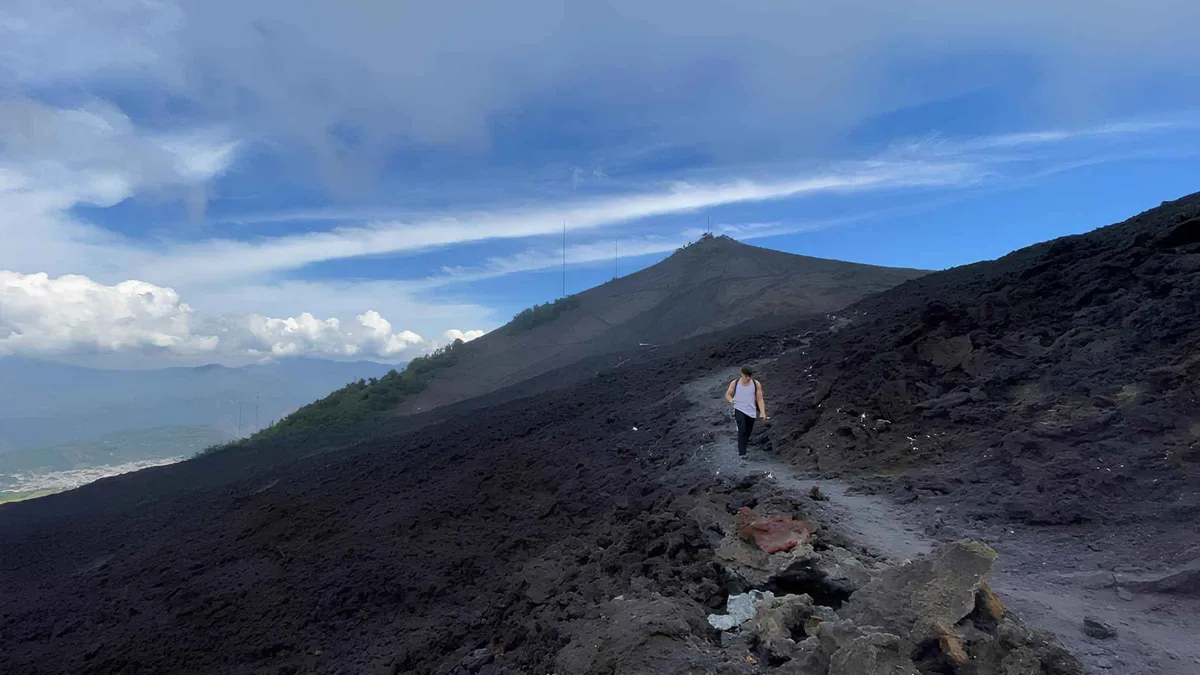
1,576 mVertical gain to campAbout 5,170 ft over roughly 7 km, which most groups walk in 4 to 6 hours with breaks. The first two hours through the farm fields are the steepest and the loosest underfoot
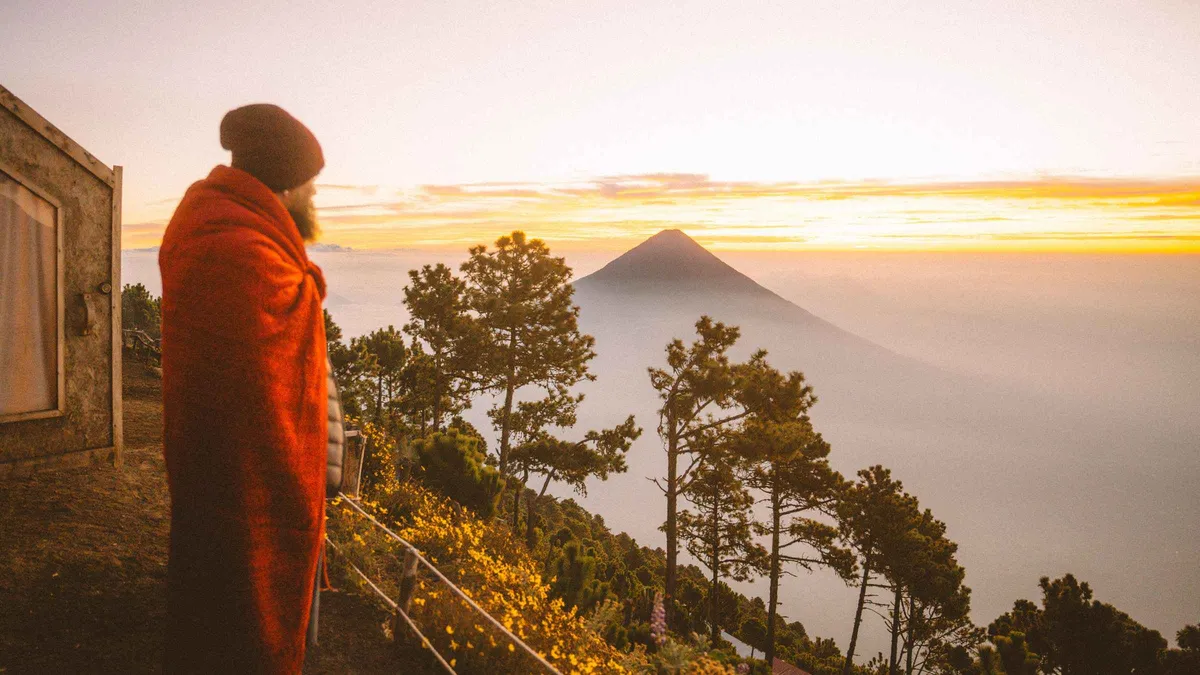
3,750 mWhere you sleepCamps sit at about 12,300 ft on the Fuego-facing side of the ridge. Sunset from here looks over Volcán de Agua, Volcán de Fuego and, on clear evenings, the Pacific
1 to 2 hoursSummit push before dawnGroups leave camp around 4:00 AM in head torches for the crater rim at 3,976 m. It is the coldest and windiest hour of the trip and the one people most often skip
2 to 3 hoursBack down to the trailheadThe descent is faster than the climb and harder on knees. Loose sand on the upper slopes lets you stride down it; trekking poles save a lot of grief lower on the trail
0°CRoughly what the night hitsCamp temperatures fall to around freezing and wind chill takes them lower. Operators issue a sleeping bag rated to -5°C or -10°C, and most people still sleep in every layer they carried
What the Overnight Is Actually Like
Day One: Antigua to Camp
Pickup from Antigua runs between 8:00 and 10:00 AM depending on the operator, usually from an office near Parque Central. The minibus climbs west through Alotenango and drops you at La Soledad, a scatter of houses at 2,400 m where women sell walking sticks, chocobananos and last-minute gloves. Breakfast is here, and so is the last toilet you will meet for 20 hours.
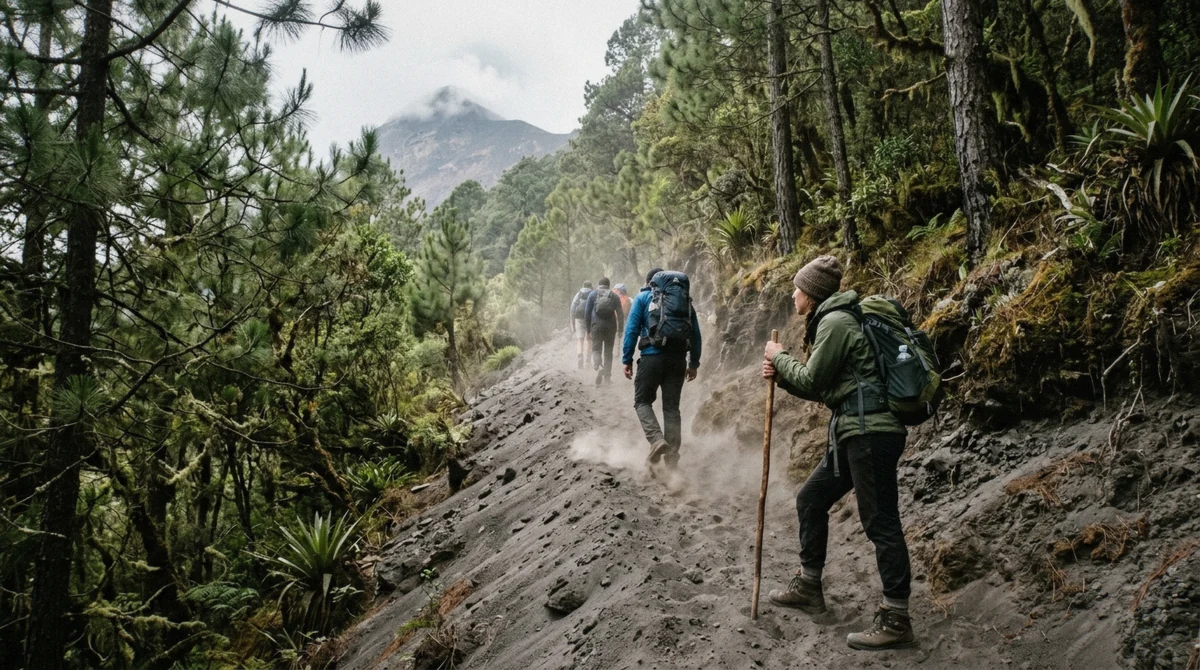
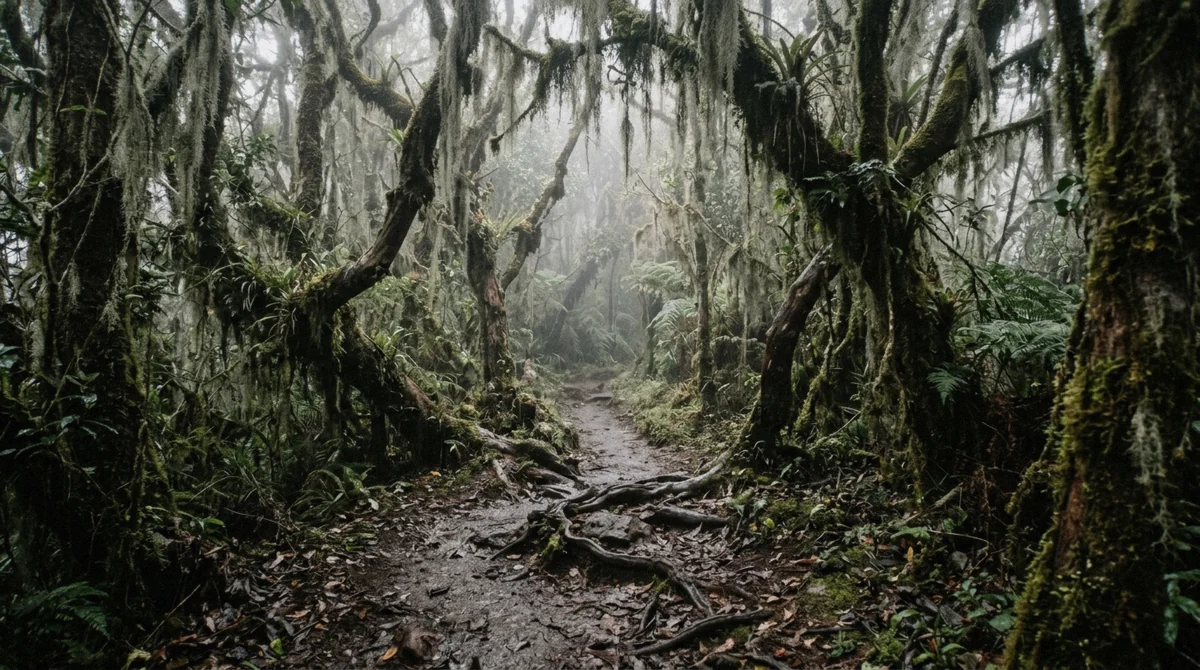
The trail starts steep and stays steep. The first hour crosses farmland in ankle-deep volcanic sand, which is the single most complained-about stretch of the whole hike, and it is where groups split into the fast and the suffering. Above the fields the path enters cloud forest, cools, firms up underfoot and becomes pleasant walking. The registration post where the 100 quetzal park fee is collected sits about an hour in.
Camp arrives 4 to 6 hours after the start. Guides get there in three, groups with anyone struggling take seven. You drop your pack, and if Fuego is awake you hear it before you see it: a low thud, like a door slamming in another building, every 10 to 20 minutes.
The Night, Which Is the Point
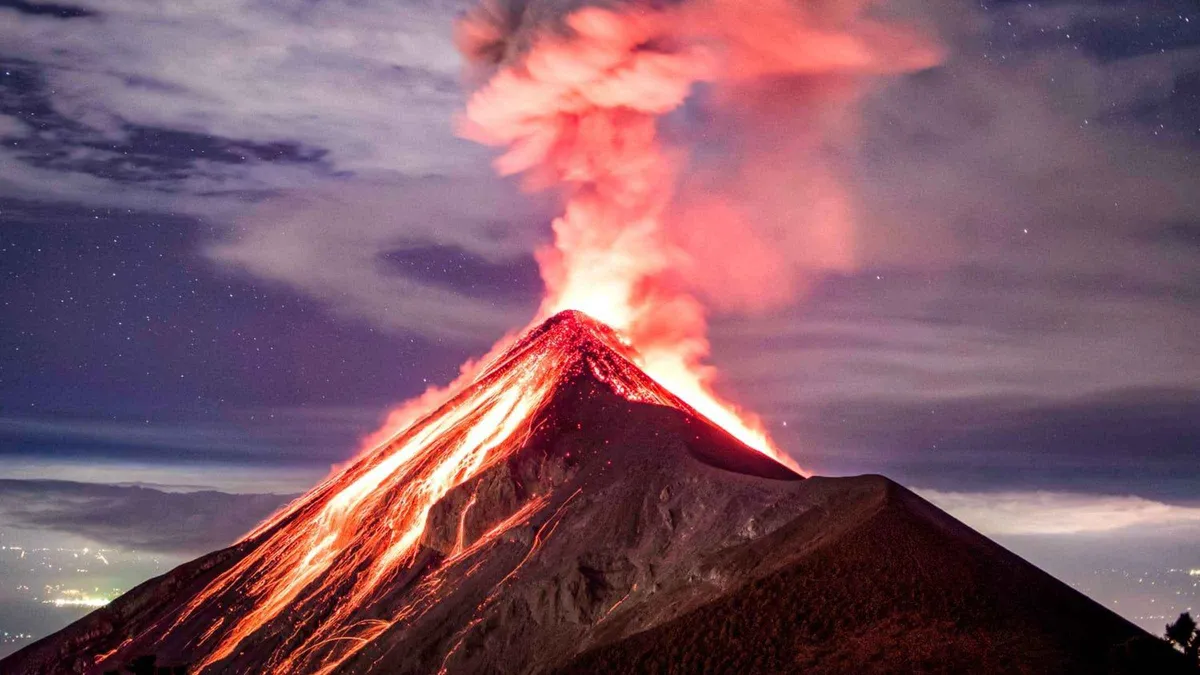
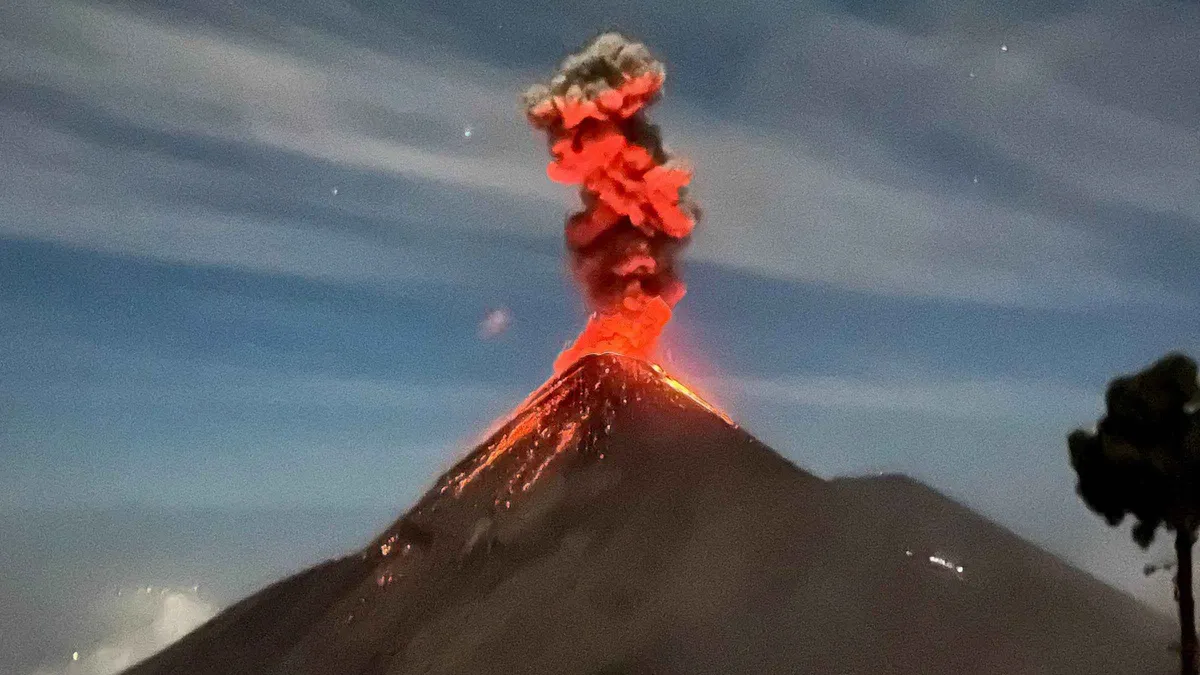
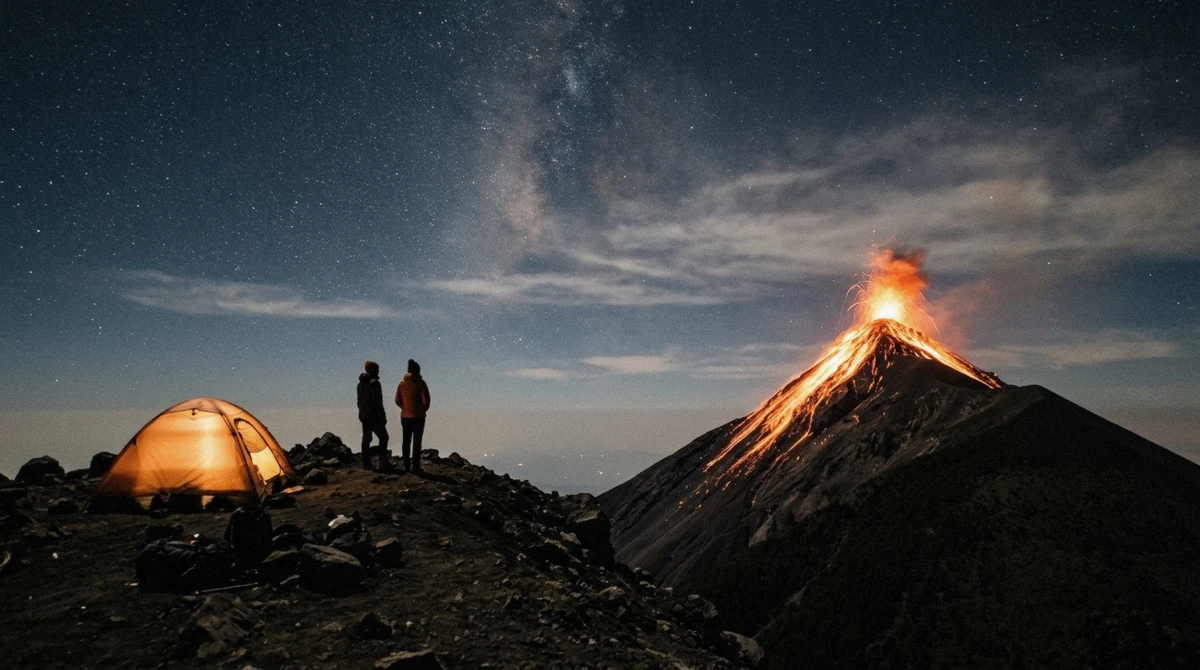
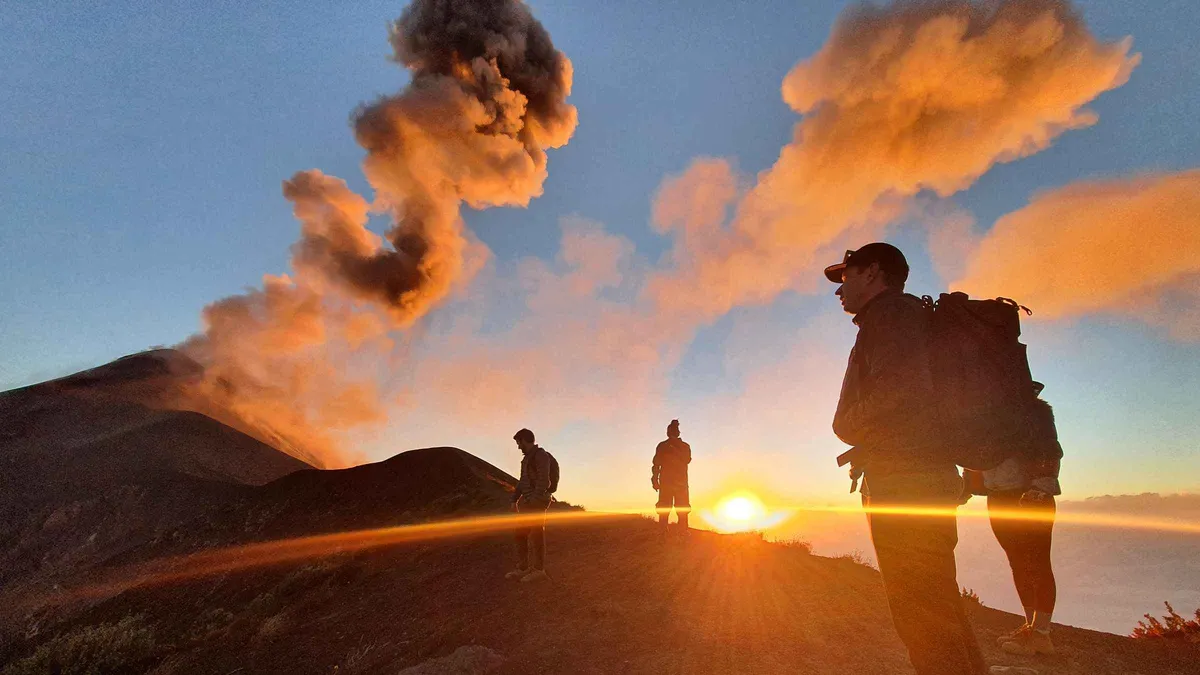
Dinner is cooked over gas or fire around 6:00 PM, and after dark the show either happens or it does not. Fuego sits about 3 km away across a saddle, its cone at almost the same height as the camp, so you watch it side-on rather than looking up at it. Explosions throw incandescent rock a few hundred metres above the vent, and the fragments roll down the flanks in orange streams that take 20 or 30 seconds to fade.
Cloud is the variable, not the volcano. INSIVUMEH has logged continuous eruption through 2026, with runs of up to 13 explosions an hour, so the mountain almost always performs. What decides your night is whether a cloud bank parks itself in the saddle, which happens often in the wet season and rarely in January and February.
Most groups are asleep by 9:00 PM. The wind picks up after midnight and the tents flap. People who came for the lava set an alarm for 2:00 AM and step outside to check, because the clouds usually clear at some point in the small hours.
Day Two: Summit, Then Down
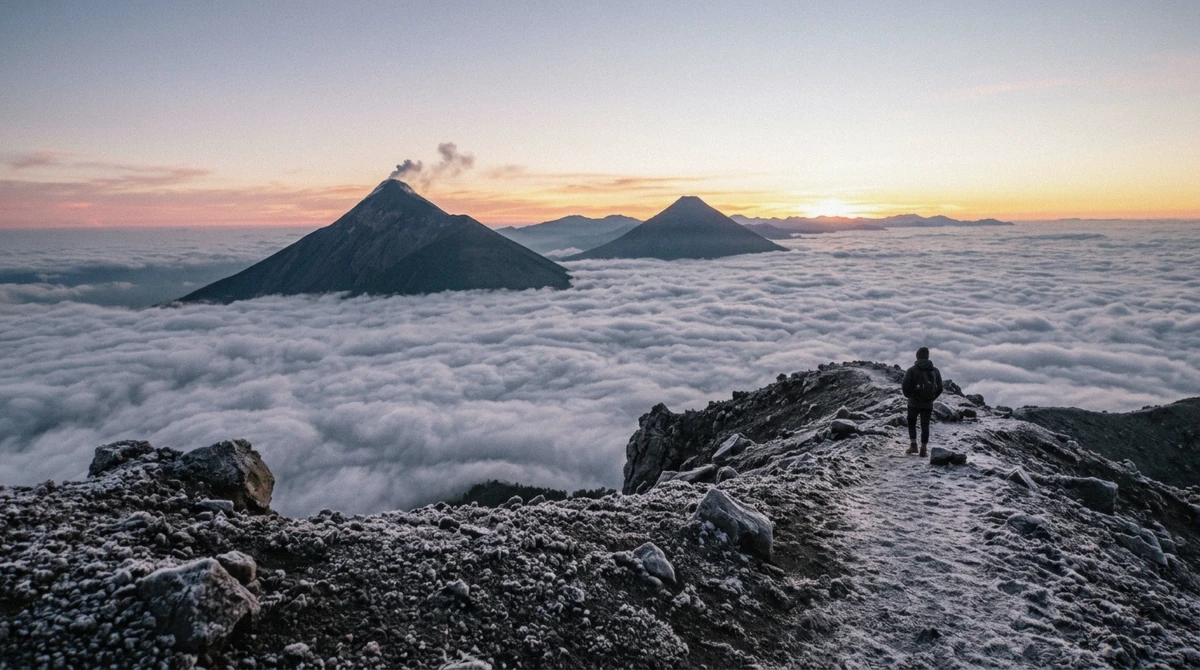
The summit alarm goes at 3:30 or 4:00 AM. It is one to two hours up loose scree from camp to the crater rim at 3,976 m, in the dark, at the coldest point of the trip, and a fair share of every group stays in their sleeping bag instead. Those who go get the reason people climb this mountain: sunrise from the third-highest summit in Central America, with Agua, Fuego, Pacaya and often the volcanoes above Lake Atitlán standing out of a flat sea of cloud.
Back at camp for breakfast around 7:00 AM, packed by 8:00, and down. The descent takes 2 to 3 hours and eats knees. The upper sand is soft enough to run in long strides; the lower forest is where people slip. Minibuses collect at La Soledad and most groups are back in Antigua by early afternoon, which leaves the rest of the day for the worst leg-stiffness of your trip and a long shower.
How Hard It Is, Honestly
Every operator calls this hike moderate to challenging, and the second word is the accurate one. Nothing about it is technical: no scrambling, no exposure, no ropes. The difficulty is 1,576 m of vertical gain carried out in one afternoon, on loose ground, at an altitude where fit people find themselves stopping every 50 steps.
Altitude is the part travellers underestimate. Camp sits at 3,750 m and the summit at 3,976 m. Headaches, poor sleep and no appetite are normal up there; if you flew into Guatemala City two days ago and have not been above 2,000 m since, expect to feel it. Spending a few nights in Antigua at 1,530 m, or better in Quetzaltenango at 2,330 m, makes a real difference.
An honest fitness gate: if you can walk uphill for five hours with a 6 kg daypack and no drama at home, you will be fine. If that sounds unlikely, book a 4x4 tour or a private guide who will set your pace, or take the Pacaya day trip instead and enjoy your holiday.
What You Pay Beyond the Tour Price
The listed price is not the final price on this mountain, and the gaps between operators are where the cheap tours make their money back. The 100 quetzal park fee is the one that catches people out: some tours include it, others collect it in cash at the registration post, and there is no card machine on a volcano.
The quetzal figures below convert at about 7.6Q to the dollar, the rate on 2 August 2026. Carry small notes; nobody up there can change a Q200.
Extra
Typical cost
Notes
Park entrance fee
100Q ($13)
Collected in cash on the trail. Included by some operators, not by others, so check the listing
Fuego ridge add-on
200 to 250Q ($26 to $33)
A 3 to 5 hour out-and-back from camp toward Fuego's flank. Premium operators charge $79 to $109 for the same walk
Porter
200 to 500Q ($26 to $66)
Carries your pack to camp, usually priced above a 12 kg threshold. Book it in Antigua, not on the trail
Gear rental
50 to 150Q ($7 to $20)
Jacket, gloves, hat, headlamp or poles if your tour does not include them
Guide tip
50 to 100Q ($7 to $13)
Customary, not required. Guides carry the food and the first-aid kit up the same hill you did
Water
20 to 40Q ($3 to $5)
Most tours give 1 to 2 litres. You want 3 to 4 litres for the climb, and it is sold at the trailhead
What to Pack for a Night at 3,750 Metres
Tours provide a tent or cabin, a sleeping bag and meals. Warm clothing is where people get caught, because Antigua sits at 26°C in the afternoon and camp is around freezing at 3:00 AM. Anything you rent in town costs a fraction of being cold all night.
Pack for the climb, not for the campsite: everything on this list rides on your back for 1,576 vertical metres, so a 6 to 8 kg pack is the target.
Three warm layers: thermal base, fleece, insulated jacket. Wear one, carry two
Waterproof shell, even in the dry season. Cloud rolls through camp most evenings
Hat, gloves and a buff. Wind at camp does more damage than the temperature
3 to 4 litres of water, bought at the trailhead if your tour does not supply it
Broken-in hiking boots with ankle support. The descent is where trainers end trips
Headlamp with fresh batteries for the 4:00 AM summit push
Snacks with sugar and salt, plus any altitude medication you already use
Cash in quetzales for the park fee, the add-on and the tip
Trekking poles, rented for 30 to 50Q, which take a real load off knees on the way down
Four Ways Up Acatenango
The 2-day overnight is what almost everyone books, and it is the only version that puts you on the mountain after dark. The other three exist for specific reasons.
Tour type
Time
Typical price
What you get
Trade-off
2-day overnight
2 days, 1 night
$57 to $240
Camp at 3,750 m, night eruptions, dawn summit
One night at altitude, and you carry your kit up
1-day summit
8 to 10 hours
About $94
Up and down in daylight, back for dinner
No night show, and a brutal pace
3-day trek
3 days
$200 and up
Slower acclimatisation, often a second volcano
Costs more and few operators run it
4x4 jeep tour
2 days, 1 night
$400 and up
45 minutes of driving replaces most of the climb
The most expensive way, and about an hour of walking left
Prices are per person and reflect the range published by Antigua operators in August 2026. The 4x4 route is quoted per group by some operators, so it drops sharply with four or more people.
Where the Hike Starts
Tours leave from Antigua at 14.56°N, 90.73°W and drive about an hour west through Alotenango to the trailhead at La Soledad. Guatemala City airport is a further 1.5 hours east of Antigua, and shuttles from Lake Atitlán take about 3 hours.
The Climb in Numbers
Four heights explain the whole hike. Antigua for reference, the trailhead where you start walking, camp where you sleep, and the crater rim you leave for dawn.
Antigua1530 mWhere you sleep the night before
La Soledad trailhead2400 mWalking starts here, about an hour from Antigua
Base camp3750 m4 to 6 hours up, facing Fuego
Fuego cone3763 mAbout 3 km across the saddle, at eye level
Acatenango summit3976 m1 to 2 hours above camp, reached before sunrise
Acatenango is the third-highest volcano in Central America. The gain from trailhead to summit is 1,576 m, and almost all of it is walked in a single afternoon.
What Hikers Said Afterwards
★★★★★★★★★★
Hardest thing I have done on a holiday and I would do it again tomorrow. The first hour of sand nearly broke me, then the forest arrived and it got better. Fuego went off maybe thirty times before I fell asleep.
Marcus · United Kingdom · March 2026
★★★★★★★★★★
Book the cabin, not the tent. It was around freezing at three in the morning and the people in tents did not sleep. Our guide carried extra blankets up for anyone who needed them, which says a lot.
Elise · France · January 2026
★★★★★★★★★★
Cloud sat on the camp all evening and we saw nothing until half past two, when it cleared completely. Worth setting an alarm and checking. The sunrise from the summit made up for the cold walk up.
Daniel · Canada · June 2026
The cloud forest section, roughly two hours in, is where the trail firms up and the hike turns from an ordeal into a walk.
Six Things That Separate These Tours
Group size sets the pace
Small-group tours cap at 8 to 12 hikers. The highest-volume budget operators run 40 to 70 people up the same trail on a Saturday, which means queues at the narrow sections and a camp that never gets quiet.
Cabin or tent decides your night
A wooden cabin with a Fuego-facing window costs more and buys you sleep. A three-season tent at 3,750 m in wind is the single most common complaint in reviews of the cheapest departures.
Check whether the park fee is in
The 100 quetzal fee is collected in cash on the trail. A $57 tour that excludes it and a $70 tour that includes it are closer than the listings suggest.
Ask what the guide carries
A first-aid kit, a spare warm layer and a radio are the difference between a guided group and a group with someone walking in front. Certified operators carry all three.
Review counts are lopsided
One listing here carries 1,628 reviews and another carries two. A thin count usually means a new listing rather than a bad tour, so weigh the operator's own record alongside it.
Read the refund window
Platform bookings cancel free 24 hours ahead. Book direct with an Antigua operator and the terms tighten: one refunds 90% at 72 hours or more, 40% between 48 and 72 hours, and nothing inside 48 hours.
When to Hike: Rain Is the Only Variable
Antigua's temperature barely moves across the year, so it tells you nothing about when to book. Rainfall does. The dry season from November to April clears the saddle and gives the reliable Fuego views; June and September bury the mountain in cloud.
8mmJan24°C
10mmFeb26°C
22mmMar27°C
63mmApr27°C
152mmMay25°C
304mmJun23°C
130mmJul25°C
199mmAug24°C
246mmSep24°C
201mmOct23°C
62mmNov23°C
14mmDec24°C
Dry season (November to April)
Rainy season (May to October)
Rainfall and day-high temperatures for Antigua at 1,530 m, averaged over 2016 to 2025 (Open-Meteo ERA5). Camp sits 2,200 m higher and runs around freezing at night in every month of the year.
Safety, Guides and Getting There
Is It Safe With Fuego Erupting?
Fuego is one of the most consistently active volcanoes in the Americas and has erupted without a real pause through 2026. INSIVUMEH bulletins through the year describe explosions at up to 13 an hour, ash plumes around 1,000 m above the vent and ashfall on villages on the southern flank such as Panimaché and Santa Sofía.
Acatenango itself is dormant, which is why you can sleep on it. Camps sit roughly 3 km from Fuego's cone, on the far side of a saddle and outside the mapped pyroclastic flow paths, which run south and west away from the camps. The eruption of 3 June 2018 killed at least 190 people in the villages below Fuego's southern flank and destroyed base camps in use at the time; the current camps were positioned after it, further back on Acatenango's slope.
The real risks on a normal night are duller and more likely: cold, dehydration and altitude. Guides turn groups around for weather, and CONRED closes the trail outright when Fuego's activity escalates. If your operator says the mountain is shut, that is the system working.
Can You Hike Acatenango Without a Guide?
In practice, no. A certified guide is required under the CONRED and INGUAT framework that governs volcano access, and the registration post on the trail checks groups through. Beyond the rulebook, the trail forks repeatedly through farmland, cloud sits on the upper mountain most afternoons, and there is no water source above La Soledad.
There is a second reason worth being blunt about. Robberies of unaccompanied hikers on the lower slopes were a recurring problem for years, which is exactly why the guided system tightened. Groups walk together, guides carry radios, and the camps are staffed overnight.
Hiring the guide is also the cheap part of this trip. At $57 for a two-day tour with meals, a tent and transport from Antigua, doing it alone saves almost nothing and costs you the person who knows which cloud means turn around.
Getting to Antigua and the Trailhead
Every tour on this page starts in Antigua, an hour from the La Soledad trailhead by minibus. Antigua itself is about 1.5 hours from Guatemala City's La Aurora airport, and shuttles run all day from around $15 per person; taxis and Ubers cost $35 to $45.
From Lake Atitlán, shuttles to Antigua take roughly 3 hours. One of the listings here is filed under Panajachel because that is where the operator sells it, but the hike still departs from Antigua, so plan to be in town the night before.
Sleep in Antigua before the hike, not on a travel day. Groups leave between 8:00 and 10:00 AM, and arriving at 2:00 AM off a night bus is how people end up quitting on the sand slope three hours later. Cobbled streets around Parque Central and the Santa Catalina arch put you within walking distance of most operator offices.
Booking Windows and What Sells Out
Peak months are December to April and June to August. The small-group cabin tours sell out first, sometimes two weeks ahead, while the large budget departures usually have space a few days out. Full-moon dates go earliest of all, because the trail needs no headlamp and Fuego's silhouette stays visible even when it is quiet.
Booking through a platform holds your date with no payment today and free cancellation 24 hours ahead. That is worth more here than on most tours: cloud can settle on the mountain for a week in the rainy season, and being able to move a date without argument is the difference between a good night and an expensive one.
If the dates you want are gone, check the private overnight tour. Private departures run on days the group tours are full, and with three or four people sharing, the gap in price per head narrows quickly.
Shorter and Easier: The Pacaya Alternative
Not everyone should camp at 3,750 m, and there is no shame in that. Pacaya is the other volcano people hike from Antigua: about 6 hours door to door, a walk of roughly an hour and a half each way, and lava fields warm enough to toast a marshmallow on. It is not an Acatenango tour and it does not show you Fuego at night, but it costs $23 and you sleep in your own bed.
from $23Day Trip — Pacaya, Not Acatenango
From Antigua: Pacaya Volcano Tour in English/Spanish
★★★★★★★★★★4.5(1,249 reviews)· 6 hours
Not Acatenango at all: six hours on Pacaya from Antigua, walking old lava and roasting marshmallows on hot ground. The easy alternative at $23.
Overnight tours run $57 to $240 per person. Budget group departures sit at $57 to $90, mid-range hikes with cabins at $94 to $160, and private guiding at $240 and up. Add a 100 quetzal ($13) park fee if your tour excludes it, 200 to 250Q for the Fuego ridge add-on, and 200 to 500Q if you want a porter. The $90 overnight is the best-reviewed middle option here, and our full cost breakdown adds up every extra you pay on the trail.
What is the best Acatenango tour company?
There is no single best one, and anyone who tells you otherwise is selling something. Judge four things: group size, whether you sleep in a cabin or a tent, whether the park fee is included, and what the guide carries. The $57 two-day hike has the deepest review base at 1,628 reviews, while the small-group cabin tour trades price for a bed and 8 to 12 people instead of 40. If the choice is really group versus private, that comparison has its own page.
How hard is the Acatenango hike?
Challenging but not technical. You gain 1,576 m over about 7 km to camp, taking 4 to 6 hours, on loose volcanic sand for the first hour and firmer forest trail after. Camp sits at 3,750 m, where altitude costs most people a night's sleep. If you can walk uphill for five hours with a light pack at home, you can do this. We go through who finishes and who regrets it in our honest verdict on the hike.
What is the Acatenango 4x4 tour?
A jeep drives a dirt track through coffee farms for about 45 minutes, replacing most of the climb and leaving roughly an hour of walking to camp instead of 4 to 6 hours. It suits people short on time, fitness or knees. It is the most expensive way up, typically $400 and above per person for shared departures, though the price per head falls sharply with four or more.
Will I actually see lava on Acatenango?
Usually, but nobody can promise it. Fuego has erupted continuously through 2026 and INSIVUMEH has logged up to 13 explosions an hour, so the volcano is reliably active. Cloud is the variable. January and February give the clearest nights; June and September often bury the saddle in cloud until the small hours. What the volcano is actually doing, and what that means for risk, is covered in our safety guide.
Can you hike Acatenango without a guide?
No. A certified guide is required under CONRED and INGUAT rules, the registration post checks groups through, and the trail forks repeatedly through farmland with no water above La Soledad. Guided departures start at $57 with meals and transport included, so hiking alone saves little and carries real risk. We priced a solo attempt against the cheapest guided departure in hiking Acatenango without a guide.
Is the 1-day Acatenango hike worth it?
Only if you cannot spare the night. The 1-day option leaves Antigua around 4:00 AM and runs 8 to 10 hours round trip at a hard pace, for about $94. You climb the same 1,576 m and skip the reason most people come, which is watching Fuego erupt after dark. The overnight tours cost less than that in several cases.
What is the best time of year to hike Acatenango?
November to April, the dry season, gives the clearest Fuego views. January and February are the driest months, with about 8 to 10 mm of rain in Antigua. May to October is the rainy season: June averages 304 mm and cloud regularly sits over the camp all evening. Camp is around freezing at night in every month. The month-by-month rainfall table shows how the odds move.
What should I pack for the overnight hike?
Three warm layers, a waterproof shell, hat and gloves, 3 to 4 litres of water, broken-in boots with ankle support, a headlamp and cash in quetzales. Tours supply the tent or cabin, a sleeping bag rated to -5°C or -10°C and meals. Rent anything you lack in Antigua rather than buying it; a jacket and gloves cost 50 to 150Q for the trip. The full packing list covers weights, layers and what to leave behind.
Your guide
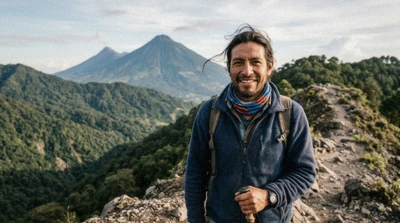
Byron Chocoj
Mountain guide, Antigua Guatemala · guiding Acatenango and Fuego since 2016
Ten years on Acatenango out of Antigua, through the season the camps moved back after Fuego's 2018 eruption. Walks the trail most weeks, checks each operator's listing against what happens on the mountain, and will tell you when Pacaya is the honest answer instead.
One night at 3,750 metres, Fuego across the saddle, and sunrise from 3,976 m. Check which dates are still open.
No payment today, free cancellation 24 hours ahead
 Acatenango Volcano Tours
 from $90
Best Rated of the Big Operators
from $90
Best Rated of the Big Operators