 Acatenango Volcano Tours
Is the Acatenango Hike Worth It? An Honest Look
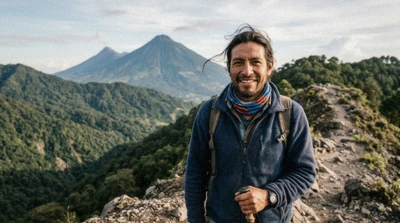
Is the Acatenango hike worth it? I have walked this trail more times than I can count since 2016, and my honest answer is a conditional one: yes, if you want to spend a night across a saddle from an erupting volcano and don't mind a hard, unglamorous climb to get there, and no, if you are counting on a comfortable campsite or a guaranteed easy day. This guide breaks down what the hike actually costs, what you get for it hour by hour, the parts most tour pages leave out, and who should book the shorter Pacaya trip instead.
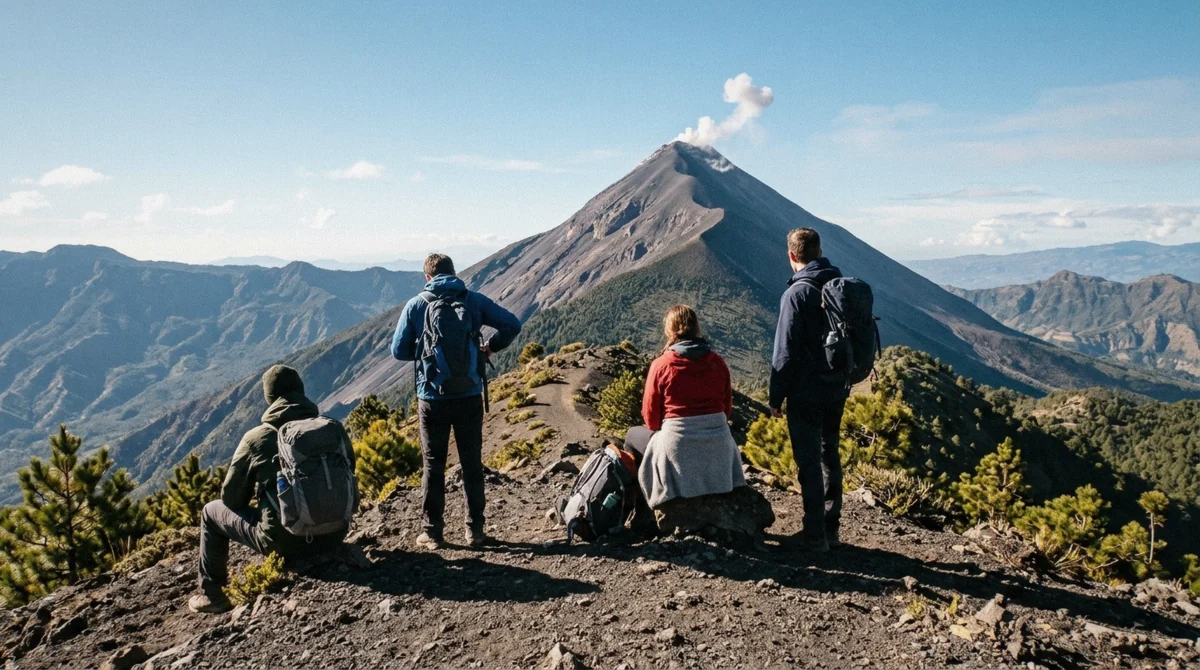
Quick answer
Yes, if you want one night watching an erupting volcano up close and can handle a hard, cold climb to earn it; no, if you need a guaranteed comfortable night or cannot walk uphill for several hours straight. Overnight tours run $57 to $240 per person, and what buys is a camp at 3,750 m with Fuego throwing lava across the saddle roughly every 15 to 30 minutes after dark.
Key takeaways
- Price range: overnight tours run $57 to $240 per person, budget group departures at the low end and a private guide at the top
- The single best reason to go: watching Fuego erupt a few kilometers away, at eye level, with no fence or glass between you and it
- The single biggest honest downside: a first hour of loose volcanic sand and camp temperatures that fall to 0 to 5°C in December and January
- Who should skip it: anyone who cannot walk uphill for four to six hours with a pack, or anyone with a single free day in Guatemala
- Best timing: dry-season nights, November through April, clear the saddle for the most reliable Fuego views
- Book at least one to two weeks ahead in dry season; platform tours cancel free up to 24 hours out
The Short Answer: Worth It If, Skip It If
Restated in full: this hike is worth it for someone who wants a genuine physical challenge and a night in front of an active volcano, and it is not worth it for someone who wants a relaxed, predictable evening. There is no middle version of Acatenango. You either sign up for a cold, hard night that pays off with something few travel days can match, or you spend the money on something easier.
Worth It If
- You have one clear evening free and don't mind a 4:00 AM alarm for the summit push
- You can walk uphill for four to six hours with a light pack and no chronic knee or heart condition
- You want an unfiltered look at an active volcano, not a viewpoint behind a rope
Skip It If
- Your Guatemala trip is one full day, since the rushed 1-day option leaves before dawn and returns you exhausted with no night at camp
- You have a real problem with cold, dark, or sleeping outdoors, since camp runs close to freezing with no heating of any kind
- Your budget caps under $60 all-in, since even the $57 tours add a 100 quetzal park fee and other real costs once you're on the trail
What It Actually Costs
Most people land somewhere between $70 and $110 once the park fee and a guide tip get added to the listed tour price, not the bare $57 or $90 printed on the booking page. See the full lineup of guided Acatenango hikes from Antigua sorted by group size and sleeping arrangement if you want the complete picture before picking a tier.
| Option | Typical price | Duration | Best for |
|---|---|---|---|
| Budget group hike | from $57 | 2 days, 1 night | Travelers on a tight budget who don't mind a big group |
| Best-reviewed overnight | from $90 | 2 days, 1 night | The balance of price, comfort and a real review history |
| Small-group cabins | from $160 | 2 days, 1 night | Travelers who want a bed and a smaller crowd |
| Private overnight | from $240 | 2 days, 1 night | Travelers who want their own pace and their own guide |
The $57 two-day hike is the honest budget floor, meals and a tent included. The $90 overnight is the one I point most first-timers toward, since it has the deepest review base on this mountain and still books for less than what a mid-range city tour costs elsewhere. Full breakdown of the park fee, the Fuego add-on and every extra you'll actually pay on the trail lives on what each overnight hike includes.
What You Get for the Money, Hour by Hour
Pickup in Antigua runs between 8:00 and 10:00 AM, and the minibus drops you at La Soledad, the trailhead village at 2,400 m, about an hour out. From there it's 4 to 6 hours of walking to camp, starting in open farmland and finishing in cloud forest that cools and firms up underfoot once the worst of the climb is behind you. That climb is what the price buys: a guide who knows the route in the dark, a tent or cabin already pitched, three real meals, and a spot at camp facing Fuego's cone across the saddle.
The payoff arrives after dinner. Camp sits close enough to Fuego that you feel the explosions as much as see them, a low thud through the ground followed a beat later by a fountain of rock lighting up the saddle. That is the entire case for spending the money: nowhere else on a normal vacation puts you this close to something this alive.
Morning buys a second experience on top of the first. Whoever joins the pre-dawn summit push stands on the crater rim at 3,976 m as the sun comes up over a sea of cloud, with Agua, Fuego and often the volcanoes above Lake Atitlán poking through it. That second sunrise is not guaranteed by the tour price alone; it takes getting out of a warm sleeping bag at 3:30 AM, which is the one part of this trip no amount of money buys for you.
How Hard It Really Is
The hike gains 1,576 m from the La Soledad trailhead at 2,400 m to the summit at 3,976 m, though the overnight tour itself only guarantees camp at 3,750 m; touching 3,976 m means joining the optional pre-dawn summit push the next morning. The first hour above La Soledad crosses loose volcanic sand across open farmland, the single stretch every guide in Antigua hears complaints about, and it is where fitness gaps show up first, not later.
The descent takes 2 to 3 hours and is harder on the knees than the climb is on the lungs, since the same loose sand that slowed your legs going up now wants to slide out from under you coming down. Altitude adds its own tax on top of the terrain: acute mountain sickness affects roughly 25% of people at camp altitude regardless of fitness, which means headaches, a lost appetite and a poor night's sleep are ordinary here, even for someone who runs half marathons at sea level.
Altitude is the part travellers underestimate, and it is covered properly in our safety guide. What you carry up decides how much of that gain hurts, so read the packing list before you rent a pack in Antigua.
The Hike in Four Numbers, and What Each One Feels Like
People ask how hard it is in the abstract. These are the four numbers that decide it, with what each actually costs you on the day.
| The number | What it is | What it feels like |
|---|---|---|
| 1,576 m | Vertical gain from the trailhead to the summit | Five hours of uphill with no flat recovery stretch worth the name |
| 4 to 6 hours | Walking time from La Soledad to camp | The first hour in volcanic sand is the hardest part of the whole hike |
| 3,750 m | Camp altitude | Broken sleep, no appetite and a headache for roughly a quarter of every group |
| 2 to 3 hours | The descent | Faster than the climb and harder on knees, which is why poles are worth the rental |
The Honest Downsides
These are the real complaints, roughly in the order guides actually hear them, not a polished list built to sound balanced.
The Cold at Camp
Camp temperatures fall to 0 to 5°C in December and January, with wind chill near -10°C on the summit at dawn. Booking a cabin tour instead of a tent, or renting a heavier bag, buys real sleep on a cold night.
Fuego Doesn't Perform on a Schedule
Fuego erupts roughly every 15 to 30 minutes on an average night, but cloud can hide the whole show for hours at a stretch. Setting an alarm to check the sky at 2:00 AM, rather than judging the night off one glance after dinner, catches most of the clear windows that do come.
No Shower, No Real Toilet After the Trailhead
Everyone smells like campfire smoke by the time they're back in Antigua and there is nothing resembling a bathroom above La Soledad. Wet wipes and low expectations fix this; it's one uncomfortable night, not a standard of comfort you were ever going to get on a volcano.
Big Groups on Budget Departures
The highest-volume budget operators run 40 to 70 hikers up the same trail on a Saturday, which turns the sand slope into a queue and camp into a crowd rather than a quiet night. Paying more for the small-group or private tier is the only real fix if a crowded camp would ruin the experience for you.
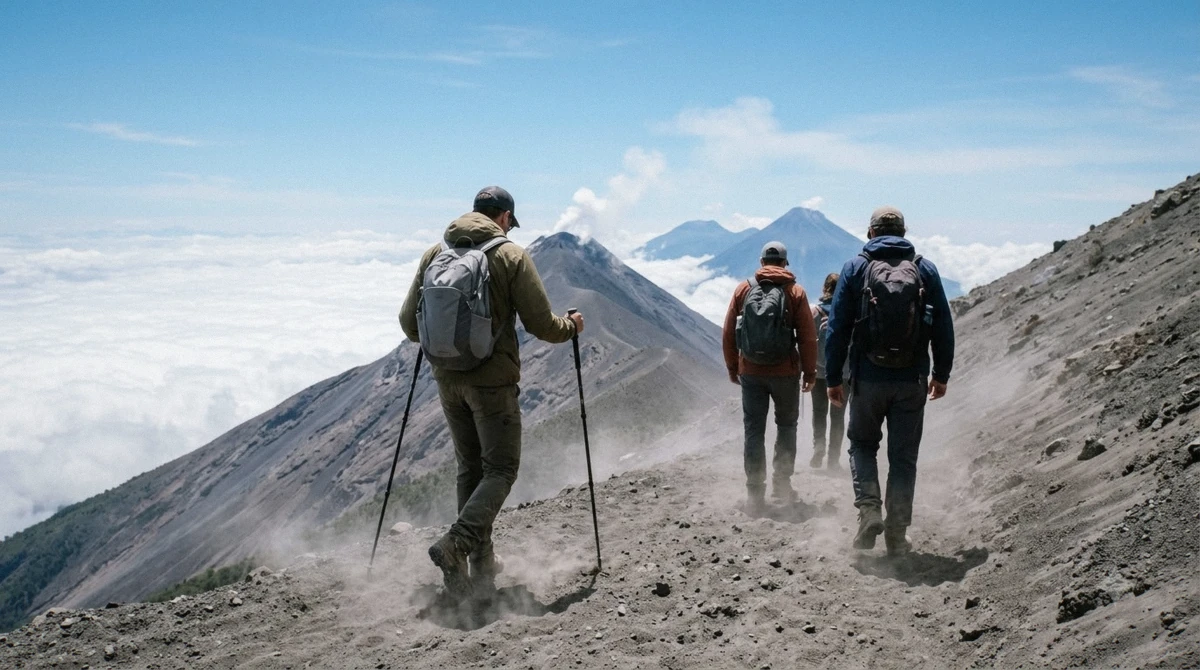
The descent, which nobody photographs and everybody remembers. Two to three hours of loose sand and gravel on tired knees.
Who Regrets It
If You have never hiked more than two hours at once
Doable, but book the private or small-group tour so a guide can slow the pace rather than leave you behind the group.
If You are traveling with children under 10
Skip the overnight. There is no toilet after the trailhead, no heating at camp, and a 4:00 AM summit push most kids that age shouldn't attempt; take them to Pacaya instead.
If You have bad knees or a joint injury
Reconsider. The 2 to 3 hour descent on loose sand and gravel is harder on joints than the climb is on the lungs, and there is no shortcut down the mountain.
If You have one full day in Guatemala and no second night to spare
Skip the overnight. Either book the 1-day option, which leaves Antigua around 4:00 AM and runs 8 to 10 hours with no night at camp, or do Pacaya instead.
If You get cold easily and dislike sleeping outdoors
Book a cabin tour rather than a tent, or skip it entirely. Camp temperatures fall to 0 to 5°C and there is no way to opt out of the cold once you're up there.
When It Is Worth It Most
Dry season, November through April, is when the hike earns its price most reliably: clearer saddles mean a better shot at watching Fuego rather than staring at fog. January and February are the driest months on the calendar and give the best odds of a clean night. Rainy-season nights, especially June and September, sit on the mountain more often than not and can turn the whole trip into an expensive campout with nothing to show for it after dark.
A full moon adds a smaller but real bonus in any month, since it lights the trail enough that a headlamp becomes a backup rather than a necessity for the pre-dawn summit push. For the full month-by-month breakdown, including booking lead times and which weeks sell out first, see hikes with free cancellation.
Acatenango Hike: Pros and Cons
Weighed plainly, without a thumb on the scale either way.
What we genuinely like
- An erupting volcano at eye level, not through a fence or a zoom lens
- Sunrise from the third-highest summit in Central America, above a sea of cloud
- A real physical challenge you can finish in a day and a half, not a multi-day expedition
- Guided departures start at $57 with meals, a tent and transport already included
The honest downsides
- Camp cold that no amount of enthusiasm fixes, down to 0 to 5°C on the worst nights
- A first hour of loose volcanic sand that breaks the pace of most first-timers
- No guarantee Fuego performs on your specific night; cloud hides it more often in the rainy season
- Real extra costs beyond the ticket price: the park fee, a possible Fuego add-on, a possible porter
Who it's NOT for: Travelers with under 24 hours in Guatemala, anyone who cannot walk uphill for four hours straight, or anyone who needs a warm night's sleep guaranteed.
The Cheaper Alternative If the Answer Is No
If Acatenango sounds like the wrong trip for you right now, that doesn't mean skipping Guatemala's volcanoes altogether. Pacaya is the short alternative: about $23, roughly 6 hours from Antigua door to door, and a walk of about ninety minutes each way across cooled lava fields you can actually toast a marshmallow on. It won't show you Fuego erupting after dark, and it isn't a discount version of Acatenango so much as a genuinely different day, but it lets you stand on an active Guatemalan volcano without the cold night or the sand-slope first hour. For families with young kids, travelers on a single free day, or anyone who read the decision box above and recognized themselves, Pacaya is the honest next move rather than forcing a hike that was never built for them.
Questions People Ask Before Deciding
Is the Acatenango hike worth it for beginners?
Yes, with the right tour. A beginner with no hiking background can finish it, but the first hour of loose volcanic sand and the altitude at camp hit untrained legs and lungs hard. Booking the private or small-group tier, where a guide can slow the pace rather than leave you trailing the group, makes the difference for a genuine first-timer.
Can the average person hike Acatenango?
Most healthy adults can, if they can walk uphill for four to six hours with a light pack without a medical issue that rules out altitude or exertion. It is not a technical climb; no ropes, no scrambling. It is a long, steep, ordinary walk carried out at a height where the air holds noticeably less oxygen than most people are used to.
Is Acatenango harder than Kilimanjaro?
No. Kilimanjaro tops out above 5,800 m over five to nine days, several days longer at altitudes far above Acatenango's 3,976 m summit. Acatenango compresses its difficulty into one steep afternoon of 1,576 m of gain rather than spreading it across a week, so it feels brutal in the moment but resolves in a day and a half, not a multi-day expedition.
Is it better to hike Acatenango day or overnight?
Overnight, almost always. The 1-day option covers the same 1,576 m of gain at a harder pace and skips the entire reason most people book this hike, watching Fuego erupt after dark from camp. Only travelers with genuinely one day in Guatemala should take the day option over the overnight.
What do people regret most about the Acatenango hike?
Underestimating the cold, more often than the climb itself. Travelers train for the uphill and still show up without enough warm layers for a night that drops to 0 to 5°C, and a cold, sleepless night colors the whole trip more than sore legs ever do.
How many people quit partway up Acatenango?
There's no published number, but guides see it most often in the first hour of volcanic sand, before the trail firms up in the cloud forest. Anyone who makes it past that first hour at a reasonable pace almost always reaches camp; the sand, not the altitude, is where the hike actually filters people.
I've guided this mountain long enough to stop pretending it suits everyone, and it doesn't need to. It suits people willing to trade one cold, hard night for a view of an active volcano that no photograph does justice to. If that trade sounds worth making, book the tour that fits your budget and your fitness honestly rather than the cheapest one on the page.
If it doesn't, Pacaya is there, and there's no shame in choosing the easier volcano. Whichever way this lands for you, decide it before you land in Antigua, not on the sand slope an hour above La Soledad, because that is the worst place to find out the trip was the wrong one.