 Acatenango Volcano Tours
Best Time of Year to Hike Acatenango: Month-by-Month Guide
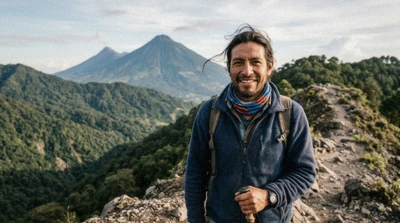
The best time to hike Acatenango is November to April, the dry season, when clear skies over Antigua mean a much better chance of a cloud-free view of Fuego from camp. January and February are the driest and clearest months of all. The runner-up window is the shoulder months either side, April and November, which trade a slightly higher chance of rain for thinner crowds. The window to avoid, if you can choose, is June and September, the wettest months of the year, when cloud regularly sits over camp for the whole evening. I've guided this trail in every month of the year, and the mountain never actually closes for weather; what changes is your odds of seeing anything once the sun goes down.
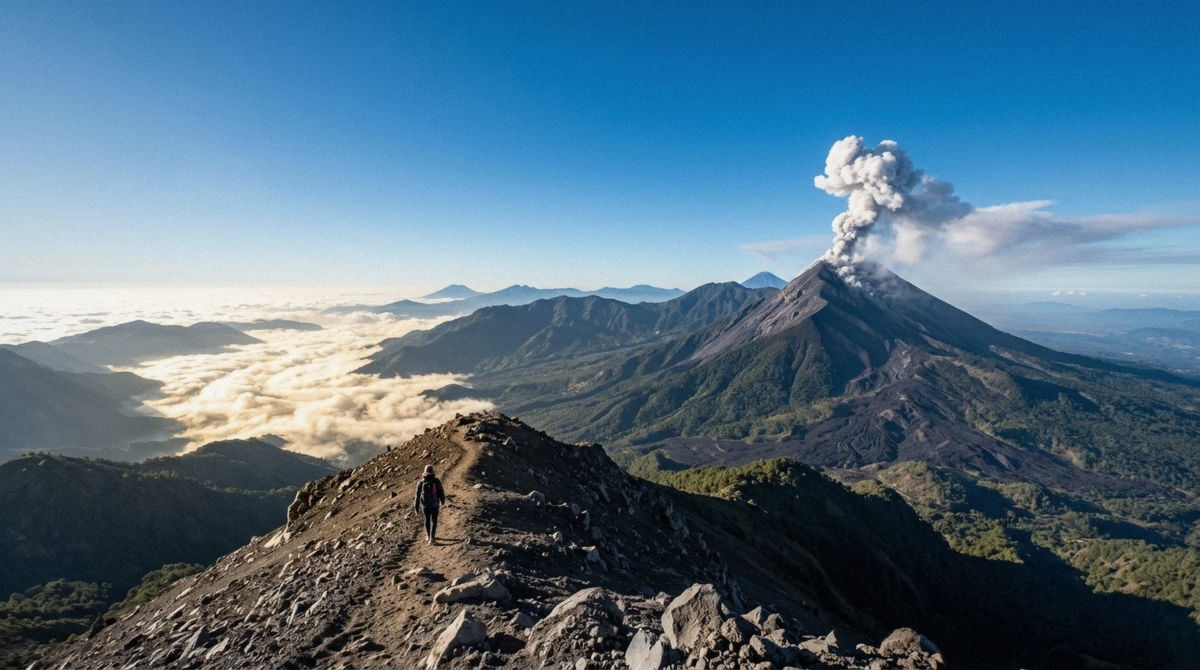
Quick answer
November to April, the dry season, is the best time to hike Acatenango, with January and February the driest and clearest months for watching Fuego after dark. June and September, the wettest months, are the ones to avoid if your dates are flexible.
Key takeaways
- Best window: January and February, with about 8 to 10 mm of rain a month in Antigua and the clearest evening skies
- Runner-up: the shoulder months of April and November, slightly wetter but noticeably thinner crowds
- Fuego erupts every 15 to 30 minutes year-round, so cloud cover, not the volcano, decides what you actually see
- Antigua's day temperature barely moves across the year, 23 to 27°C, so rain, not heat, is what to plan around
- Dry-season weekends and full-moon dates book out fastest; rainy-season space often opens up just days ahead
- Dry season or not, every hike here books with no payment today: compare Acatenango departures by date once you have picked your month
Month-by-Month: Rain, Cloud and Your Odds of Seeing Lava
The table below is the one number to check before you pick dates. Read the Verdict column first; the rain and temperature figures underneath explain why each month lands where it does.
| Month | Conditions | Weather | Crowds | Verdict |
|---|---|---|---|---|
| January | Clearest skies of the year over Fuego | Dry, 8 mm rain, 24°C days | High (New Year week) | Best overall |
| February | Very clear, slightly warmer | Dry, 10 mm rain, 26°C days | Moderate | Best value, driest quiet stretch |
| March | Still reliably clear | Dry, 22 mm rain, 27°C days | Moderate to high | Excellent, warming up |
| April | Good odds, first rain builds | Dry season tail, 63 mm rain, 27°C days | High (Semana Santa) | Good, book early for Easter week |
| May | Rainy season begins | 152 mm rain, 25°C days | Moderate | Fair, afternoon storms build |
| June | Heaviest cloud cover of the year | Wettest month, 304 mm rain, 23°C days | Moderate to high | Avoid if flexible |
| July | Brief dry spell within the rains | 130 mm rain, 25°C days | High (summer break) | Workable, mornings often clear |
| August | Wet, cloud builds most afternoons | 199 mm rain, 24°C days | High | Fair, book morning starts |
| September | Second-wettest month | 246 mm rain, 24°C days | Low | Skip if you can move your dates |
| October | Still wet, improving late month | 201 mm rain, 23°C days | Low | Fair, thinnest crowds of the year |
| November | Dry season returns | 62 mm rain, 23°C days | Moderate | Good value shoulder month |
| December | Clear and cool, holiday crowds | 14 mm rain, 24°C days | High (Christmas, New Year) | Very good, book well ahead |
No two adjacent months on this mountain share an identical picture once you look at the actual rainfall: January's 8 mm and June's 304 mm describe two different hikes, not a minor seasonal shift.
Temperatures and rainfall for Antigua, the town every tour departs from, typical values averaged 2016 to 2025.
| Month | High | Low | Rain |
|---|---|---|---|
| January | 24°C | 13°C | 8 mm |
| February | 26°C | 13°C | 10 mm |
| March | 27°C | 14°C | 22 mm |
| April | 27°C | 15°C | 63 mm |
| May | 25°C | 15°C | 152 mm |
| June | 23°C | 15°C | 304 mm |
| July | 25°C | 14°C | 130 mm |
| August | 24°C | 14°C | 199 mm |
| September | 24°C | 14°C | 246 mm |
| October | 23°C | 14°C | 201 mm |
| November | 23°C | 13°C | 62 mm |
| December | 24°C | 13°C | 14 mm |
These are typical Open-Meteo ERA5 averages for Antigua at 1,530 m; check the current forecast close to your dates, since any single week can run wetter or drier than the average. June is the wettest month by these figures and March is the warmest by day; camp itself runs colder than any of these numbers in every month, since it sits roughly 2,200 m higher than Antigua and stays near freezing at night year-round, which our safety guide covers in full.
Best Season by Traveller Type
If You want the clearest photos of Fuego erupting
January or February, when skies are driest and cloud rarely settles over camp before midnight
If You're travelling with a family or nervous about conditions
January through March, the most forgiving window with the lowest chance of a rained-out evening
If You want a first hike with the least chance of disappointment
February, driest month outside the New Year crowd, still uncrowded compared to January
If You're on a tighter budget and can be flexible
October or November, when rooms and shuttles in Antigua run cheaper and rain is already easing
If Your only free week falls in June through September
book an early-morning departure and accept the trade-off; see the rainy-season section below for what actually still works
Dry Season, November to April: The Recommendation
The dry season runs November to April, and it is the straightforward answer to when to hike Acatenango if your dates are flexible at all. January averages just 8 mm of rain across the whole month and February 10 mm, against a wettest month, June, that averages 304 mm; that gap is the entire reason this window wins.
- Antigua day temperatures run 23 to 27°C through this window, changing little month to month
- Camp still drops to 0 to 5°C at night in December and January specifically, colder than the rest of the dry season
- January and February give the clearest evening skies over Fuego of the whole year
- Dry-season weekends and the $90 overnight sell out earliest, so book ahead
April sits at the tail of the dry season and already shows the first build-up toward the rains, averaging 63 mm, more than triple February's total, so treat it as the last reliably clear month rather than a peak one. Booking two to three weeks ahead is typical for January, tightening to three to four weeks around Semana Santa in late March or April, when Antigua itself gets busy well beyond the volcano crowd.
Rainy Season, May to October, and When It Still Works
The rainy season runs May to October, and the honest version of this section is that most operators still run through it, and the hike still works, just with worse odds on any single night. June and September are the two months I would genuinely steer someone away from if their dates are flexible: June averages 304 mm of rain and September 246 mm, both well above the 130 to 200 mm range that July, August and October see.
- Morning departures beat afternoon ones in this season; storms typically build after midday, not before it
- Fuego erupts every 15 to 30 minutes regardless of season, so cloud cover, not volcanic activity, decides what you see
- Rainy-season space often opens up just 2 to 7 days ahead, unlike the dry season's multi-week lead times
- Free cancellation up to 24 hours ahead makes booking a rainy-season date a low-risk bet, not a gamble
July is the interesting exception inside the rainy season: it averages 130 mm, noticeably drier than the months either side of it, a pattern some hikers here call the canícula, a short dry spell within the rains. It is not guaranteed and it is not in every source, so treat it as a reasonable bet rather than a promise. If your only free week lands in the wet months, an early-morning start and a realistic expectation about the evening view are what actually make the trip work, not waiting for a different season.
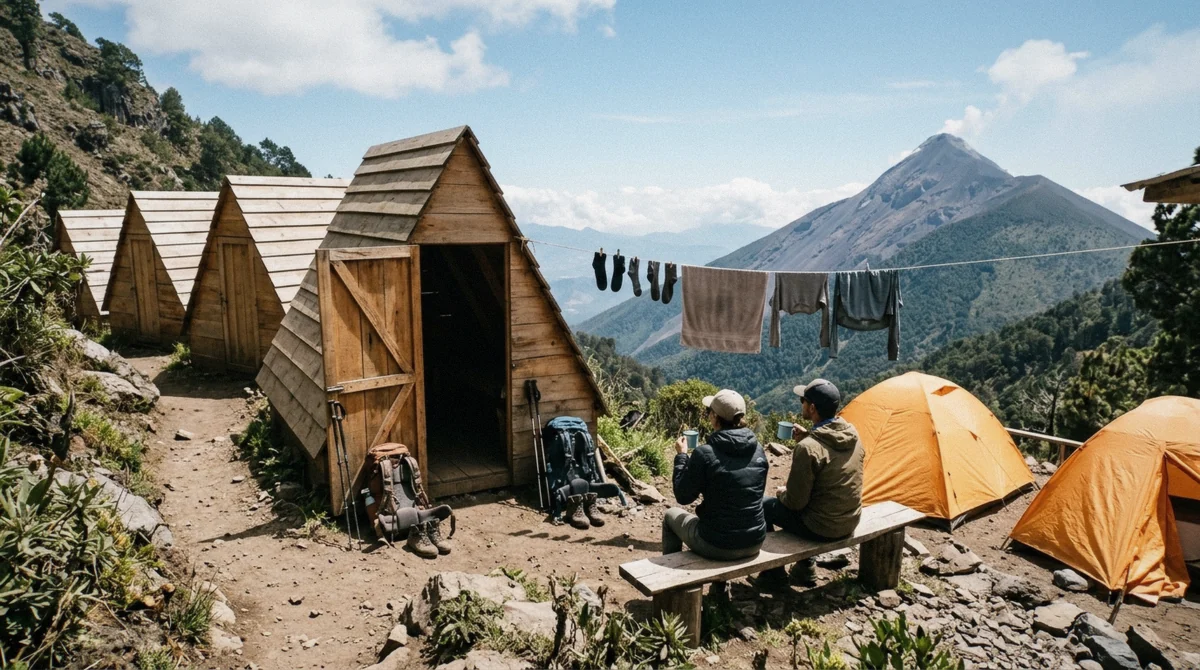
Dry-season mornings at camp look like this. In June the same view is a wall of cloud until the small hours.
Sunset, Sunrise and the Full Moon
Sunset from camp faces Volcán de Agua and, on clear evenings, the Pacific; it is the first big view of the trip and arrives after the 4 to 6 hour climb, around the time most groups are settling in for dinner. Sunrise is the other half of the trip, from the crater rim at 3,976 m after the summit push that leaves camp around 4:00 AM, and it is the one nearly every operator itinerary is built around: the 1 to 2 hour climb in the dark, then a wide view over a sea of cloud with Agua, Fuego and often Pacaya standing above it.
Both matter for different reasons, and neither replaces the other: sunset is calmer and social, sunrise is colder, harder-earned and the one people talk about afterward. If you can only pick one to prioritise mentally, it is sunrise, since that is when the sky is usually clearest and the light is best.
The full moon is worth timing around if you can. It removes the need for a headlamp on the 4:00 AM summit push and lights the trail well enough that some hikers skip the torch entirely, on top of giving Fuego's silhouette a visible outline even when it is between eruptions. It is a nice bonus, not a requirement; the hike runs the same way every night of the lunar cycle.
Crowds, Weekends and Semana Santa
Peak booking months are December to April and June to August, and within those, weekends are where the pressure actually shows up; a Saturday departure in February can look completely different from a Tuesday one two weeks later. Semana Santa, the week before Easter, is the single busiest stretch in Antigua all year, driven by processions and holiday travel that has nothing to do with the volcano, and it pushes lead times out to three to four weeks for anything on the mountain during that period.
The stretch from 15 December to 5 January carries a similar squeeze, holiday travel plus New Year crowds, and needs the same three to four week booking window. Outside those specific weeks, dry-season Saturdays generally need two to three weeks of notice and weekday departures noticeably less.
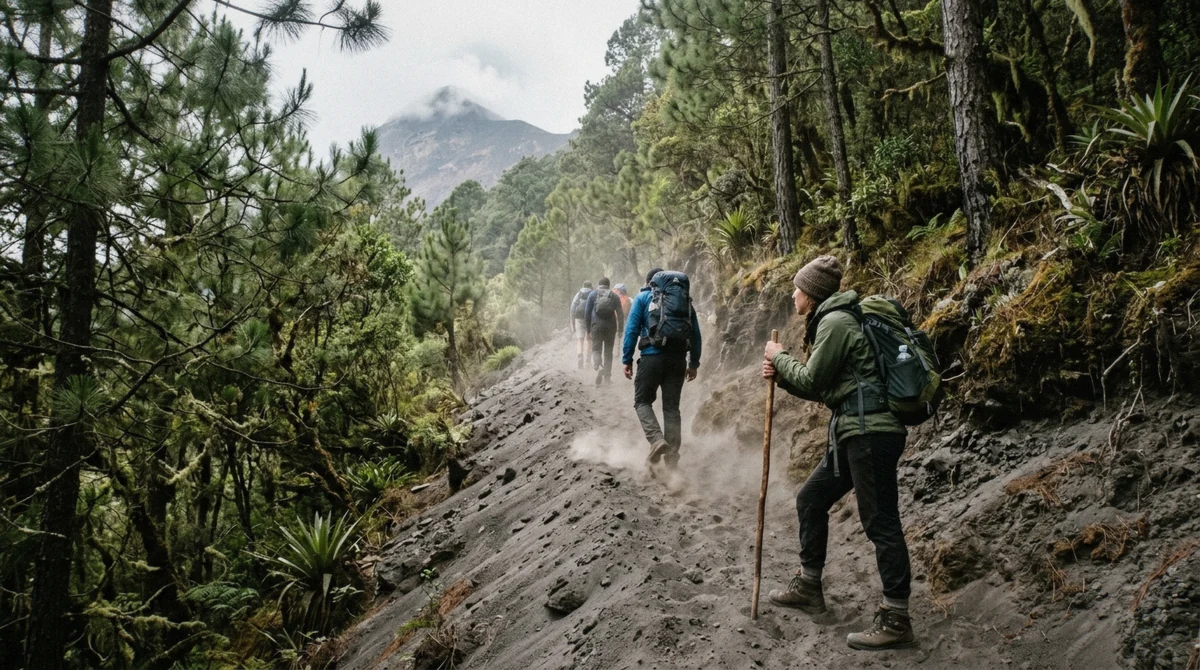
February trail conditions: dust rather than mud, which is most of the argument for the dry season.
How Far Ahead to Book by Season
Lead times track the season closely, and booking early buys you the operator you want rather than whichever one still has space.
| Period | Typical lead time | Why |
|---|---|---|
| January | 2 to 3 weeks | Driest, most in-demand month of the year |
| February | 1 to 2 weeks | Still dry, slightly less pressure than January |
| Semana Santa (March/April) | 3 to 4 weeks | Antigua-wide holiday crowd, not just volcano demand |
| Dry-season shoulder (Nov, other weeks) | 1 to 2 weeks | Good conditions without peak-week pressure |
| Rainy season (May-Oct) | 2 to 7 days | Demand drops with the odds of a clear night |
| 15 December-5 January | 3 to 4 weeks | Christmas and New Year travel stacks on top of dry-season demand |
Platform bookings here take no payment today and cancel free up to 24 hours ahead, so booking early to lock a date costs nothing if your plans shift later. The full price breakdown by tour and season sits on our pricing guide.
What to Do If Your Only Week Is the Wrong One
If June or September is genuinely the only week you have, the hike is still worth doing, and I would rather see someone go with the right expectations than skip it entirely or push a trip they can't actually reschedule. Book an early-morning summit slot where the option exists, since storms in these months typically build through the afternoon rather than sitting over the mountain from dawn. Pack for wet ground and a real chance of an obscured sunset, and treat sunrise, which happens after most overnight cloud has a chance to clear, as your better odds for the view.
If the forecast a few days out looks genuinely bad, free cancellation up to 24 hours ahead means you can shift by a day or two without losing anything, which is worth building into a rainy-season trip from the start rather than discovering it after the fact. And if the whole trip is flexible but the volcano specifically is not calling to you as strongly as a shorter outing, the Pacaya day trip runs year-round at lower altitude with less weather risk either way, worth knowing about before you force a date that doesn't suit the season. For anyone still deciding whether the overnight is worth the cold and the climb at all, our worth-it breakdown weighs that honestly, season aside.
Questions People Ask Before Booking
What is the worst month to hike Acatenango?
June, statistically. Antigua averages 304 mm of rain that month, the highest of the year, and cloud regularly sits over camp for the whole evening. September is a close second at 246 mm. Neither month closes the trail; they just lower your odds of a clear night.
Is it worth hiking Acatenango in the rainy season?
Yes, with the right expectations. Most operators run year-round, morning departures beat afternoon ones since storms typically build after midday, and Fuego still erupts every 15 to 30 minutes regardless of season. What changes is your odds of a clear evening view, not whether the hike itself happens.
How far ahead should I book an Acatenango tour?
Two to three weeks for January, one to two weeks for February, and three to four weeks around Semana Santa or the Christmas to New Year stretch. In the rainy season, space often opens up just two to seven days ahead, since demand drops along with the odds of a clear night.
Does the full moon matter on the Acatenango hike?
It's a nice bonus, not a requirement. A full moon removes the need for a headlamp on the 4:00 AM summit push and outlines Fuego's silhouette even between eruptions. The hike itself runs identically on every night of the lunar cycle.
How does the weather at camp compare to Antigua?
Antigua's day temperature moves only between about 23 and 27°C across the whole year, so it tells you almost nothing about camp. Camp sits roughly 2,200 m higher and runs near freezing at night in every month, dropping to 0 to 5°C in December and January specifically; our safety guide covers what that means for gear.
November to April is the best time to hike Acatenango, with January and February the driest and clearest months for watching Fuego after dark. April and November are the sensible runner-up windows if you want fewer crowds without giving up much on conditions. June and September are the months to avoid if your schedule allows it, not because the hike stops working, but because cloud wins most evenings.
Compare the Acatenango hikes with free cancellation once you've picked your window, so a shift in the forecast doesn't cost you anything.