 Acatenango Volcano Tours
Can You Hike Acatenango Without a Guide? Why It Takes a Tour
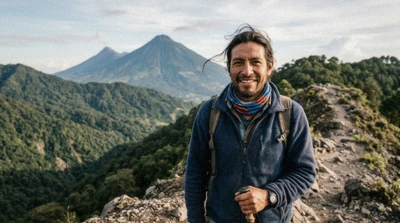
Can you hike Acatenango without a guide? No, not legally, and not in any way that saves you meaningful money. A certified guide is required under CONRED and INGUAT rules on every route up this mountain, and the registration post an hour up the trail checks groups through, so this is not a grey area you can quietly work around. I have guided this route since 2016, and every season I still get asked whether someone can just walk up on their own to skip the tour price. This post lays out the rule, what going around it would actually cost against the cheapest guided departure, and the specific risks that make the guide requirement more than paperwork.
Quick answer
You cannot legally hike Acatenango without a guide. A certified guide is required under CONRED and INGUAT rules, and the registration post on the trail checks every group through, guided or not. Even setting the rule aside, an independent attempt costs nearly as much as the cheapest guided departure once you price the taxi, gear and fee, so there is no real DIY discount here.
Key takeaways
- The verdict: no legal unguided path exists, a certified guide is required under CONRED and INGUAT rules
- Going around the rule saves very little against the $57 guided departure once taxi and gear are added
- There is no water source above the trailhead and no vehicle access to camp if something goes wrong
- The biggest risk is cold, not lava: six hikers died of hypothermia on 8 January 2017
- Robbery of unguided hikers on the lower slopes is the historic reason the guided system tightened
- The cheapest legal option is a $57 guided departure: compare the guided Acatenango departures from Antigua before pricing a solo attempt
What the Rules Actually Say
A certified guide is required under CONRED and INGUAT rules on the standard Acatenango routes, and this is enforced in practice, not just on paper. CONRED is Guatemala's disaster-coordination agency, and INGUAT is the national tourism institute; together they set the guiding requirement that every legitimate operator on this mountain follows. The registration post sits roughly an hour up the trail, and it checks groups through on the way up, guided parties and any unguided walkers alike, so the idea of quietly slipping past unnoticed does not hold up against how the trail is actually managed.
This is not a rule dreamed up to protect tour revenue. Robbery of unguided hikers on the lower slopes is the historic reason the guided system tightened in the first place, and that history is why the requirement exists at all rather than being a recent tightening. I have walked new guides through this exact point during training: the rule is older than most of the operators currently selling the hike, and it was written in response to something that actually happened to unguided walkers on this specific mountain.
| Question | The rule | What happens in practice |
|---|---|---|
| Do I need a guide at all? | Yes, a certified guide is required under CONRED and INGUAT rules | The registration post checks every group through, guided or not |
| Who enforces it? | CONRED and INGUAT set the requirement | Staff at the registration post about an hour up the trail apply it |
| Why does the rule exist? | Robbery of unguided hikers on the lower slopes | The guided system tightened in response, and stayed that way |
DIY Versus the Cheapest Guided Departure, Line by Line
The cheapest guided departure on this site is $57, and it includes transport from Antigua, meals, a tent and a sleeping bag. Set that against what an independent attempt would actually cost in taxi fares, gear rental and the park fee, and the gap narrows to almost nothing, before you even weigh in the legal problem above.
| Line item | DIY (if you attempted it) | $57 guided departure |
|---|---|---|
| Transport to La Soledad, both ways | Taxi both ways, no public transport option | Included |
| Park entrance fee | 100 quetzales, cash, same for everyone | 100 quetzales, cash, same for everyone |
| Tent and sleeping bag | Rental in Antigua, $20 to $30 for the bag alone | Included |
| Meals on the mountain | Carried and cooked yourself | Included |
| Guide | Not legally available to skip | Included, and legally required |
Once a taxi and a rented sleeping bag are added to the 100 quetzales everyone pays at the registration post, an independent attempt lands close to what the $57 tour already charges, minus the meals, the tent, and the legal standing to actually be on the trail. There is no cheap self-guided version of this hike; the real DIY costs are the taxi, the gear rental and the fee, and none of them is small enough to make going around the rule worth it.
Getting Yourself to the Trailhead
There is no public transport to La Soledad, so an independent hiker pays for a taxi in both directions, the same trailhead every guided tour drives to from Antigua. The trailhead sits about 30 km from Antigua, a drive of 1 to 1.5 hours through Ciudad Vieja and Alotenango, and there is no bus line or shuttle service that runs this specific route the way there is between, say, Antigua and Guatemala City. A taxi both ways is the only realistic option if you are not on a guided tour, and that cost sits on top of everything else in the table above.
The full transport chain, including airport transfers and what the drive actually looks like, is covered in more depth on how to get to the trailhead from Antigua, which is worth reading regardless of whether you end up going guided or not.
What You Would Have to Carry and Know
Setting the legal question aside for a moment, an independent attempt would still demand real backcountry competence. There is no water source above the trailhead, so every litre you drink on the mountain has to be carried in from Antigua, and the standard guidance on this trail is 3 to 4 litres for the day. There is also no vehicle access to camp, which means anything that goes wrong at altitude has to be walked back down, on foot, on the same trail, however long that takes.
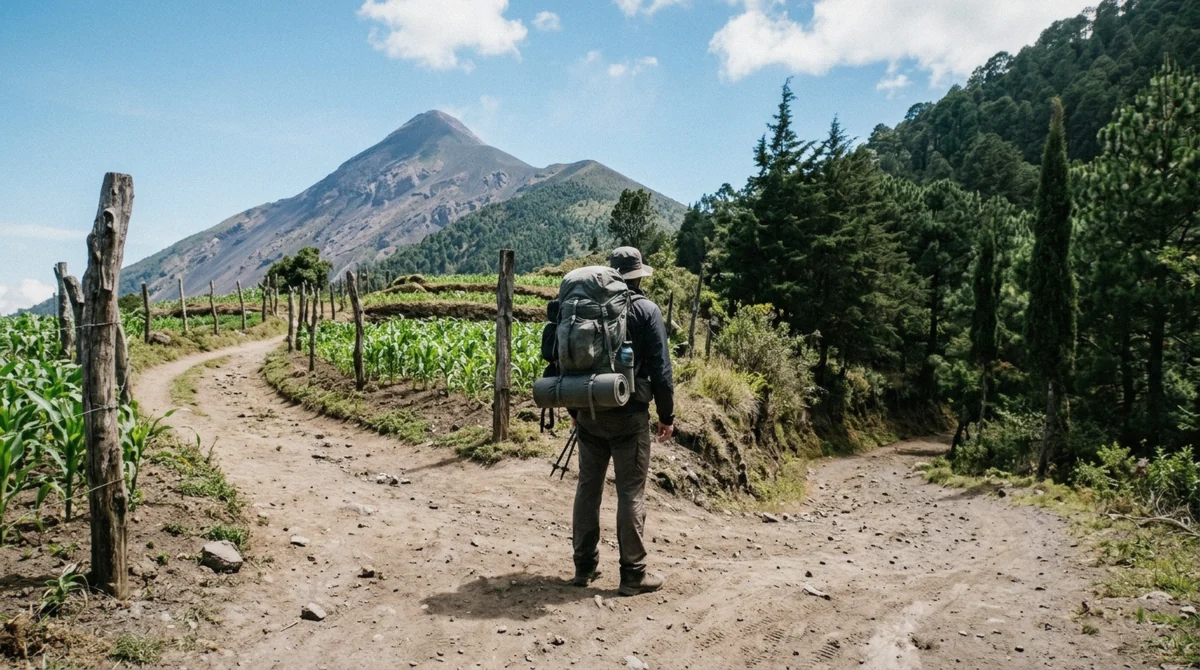
Navigation is a genuine problem too. The lower trail crosses farmland with repeated forks that are obvious to someone who walks this route weekly and are not obvious to a first-time visitor, and cloud regularly covers the upper mountain in the afternoon, cutting visibility on exactly the section where a wrong turn matters most. A solo or small independent group would need real map and compass skills, a firm grasp of where camp actually sits at roughly 3,750 m, and enough judgment to turn around before conditions force the decision.
The Risks Nobody Prices In
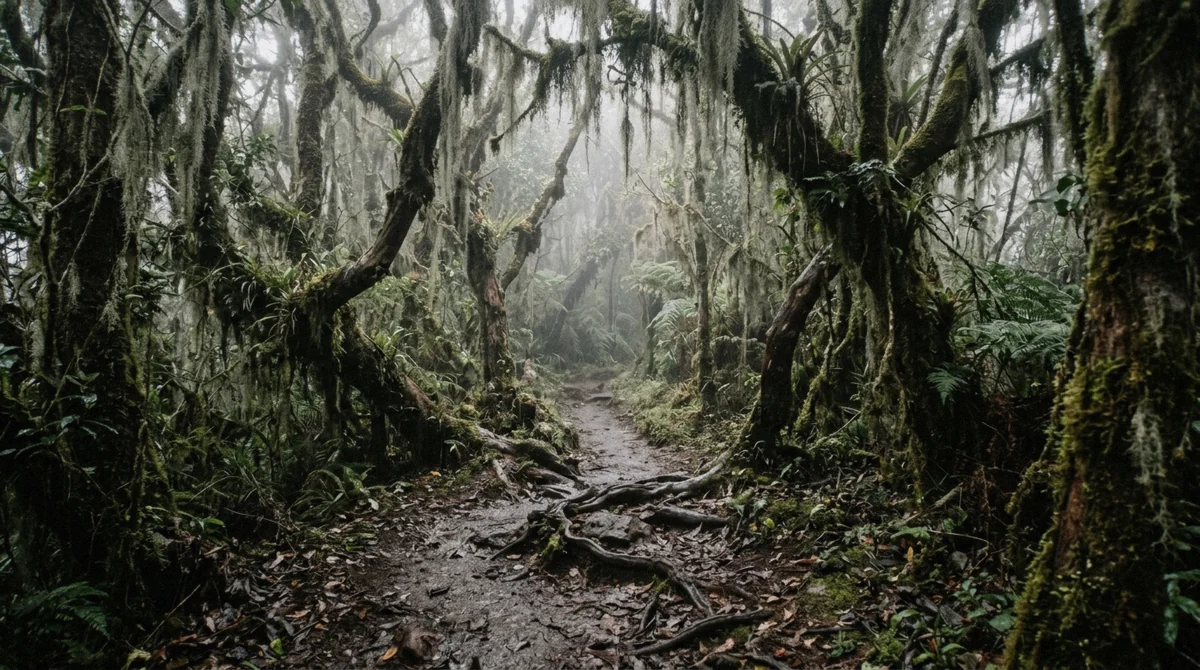
On 8 January 2017, six Guatemalan hikers died of hypothermia on Acatenango after a cold front caught an ill-equipped group; three others were rescued alive. It remains the worst single incident specific to this mountain, and it happened with no eruption involved at all, just a sudden temperature drop at altitude on people without the gear to handle it. I was guiding a different route the same week and remember exactly how fast that front moved in.
That is the risk an independent attempt cannot price in ahead of time: there is no way to know in advance whether the specific night you camp will turn cold enough to matter, and a guide's judgment about when to turn a group around or shorten a summit push is worth more than any single piece of gear. Add the robbery history on the lower slopes that pushed the guiding requirement into place to begin with, and the case against going unguided stops being about the rulebook and starts being about what has actually happened on this specific trail.
Altitude Adds Its Own Margin for Error
Camp sits at 3,750 m, where nights run around freezing and acute mountain sickness affects about 25% of people regardless of fitness level. That is a meaningful number to plan around even with a guide present, and it becomes a much harder problem to manage alone, with no water source above the trailhead and no vehicle access to get someone down quickly if symptoms turn serious overnight.
Who Does Get Away With It
Honesty matters here more than a clean no. A small number of experienced mountain walkers with real local knowledge, people who already know the fork points, carry their own gear as a matter of course, and have genuine altitude experience, do get up this mountain without paying for a tour. That is a fact, not an endorsement, and it does not change the legal picture: a certified guide is still required under CONRED and INGUAT rules, and the registration post still checks parties through.
What separates that small group from a first-time visitor reading this post is not bravado, it is years of local trail knowledge and a realistic read on their own limits in cold, thin air. If that describes you, the honest advice is still to book the guide, both because it is the legal requirement and because $57 buys competence that local knowledge alone does not fully replace, particularly judgment about weather that changes fast at 3,750 m.
What a Guide Actually Adds Beyond the Rule
It is worth being specific about what $57 actually buys beyond legal compliance, since that is the part a DIY-minded reader is right to question. A guide who works this trail every week reads cloud building over the saddle before it becomes a problem, knows which fork floods first in a sudden downpour, and can tell the difference between normal fatigue and the early signs of altitude sickness in someone who has never been above 2,000 m before. None of that shows up in a gear list, and none of it is replaceable by reading a blog post the night before, including this one.
A first-time visitor without that judgment is not just breaking a rule by going alone; they are removing the one variable that has historically kept small weather problems from becoming the kind of incident this post covers below.
What to Actually Do, by Traveller Type
If You want to save money on the hike
book the $57 guided departure; the real DIY costs in taxi, gear and the fee close most of the gap anyway
If You are experienced and want the smallest possible group
the small-group cabin tour still meets the legal guide requirement while keeping numbers low
If You want your own pace and your own guide
the private overnight gives you a certified guide without a group to follow
If You are weighing whether the whole trip is worth it
read whether the hike is worth doing at all before deciding how, not just whether, to go
If You are still unsure about the cold and altitude risk
read the full safety record for this mountain before booking any tier
Questions About Hiking Acatenango Without a Guide
Is it legal to hike Acatenango alone?
No. A certified guide is required under CONRED and INGUAT rules on the standard routes, and the registration post on the trail checks groups through. This is enforced in practice, not a rule that exists only on paper.
How much does it cost to hike Acatenango independently?
Once you add a taxi both ways, since there is no public transport to La Soledad, plus rented gear and the 100 quetzal park fee, an independent attempt costs close to the $57 guided departure, minus the meals, tent and legal standing that tour includes.
How do you get to the trailhead without a tour?
By taxi, both ways, since there is no public transport to La Soledad. The trailhead sits about 30 km from Antigua through Ciudad Vieja and Alotenango, a drive of 1 to 1.5 hours each way.
Is it safe to camp on Acatenango alone?
It carries real risk beyond the legal question. There is no water source above the trailhead and no vehicle access to camp, so any problem at altitude means walking down on foot, and about 25% of people get some altitude sickness at the 3,750 m camp regardless of fitness.
How fit do you need to be to hike Acatenango without a guide?
Fitter than a standard guided attempt requires, since navigation and pacing judgment fall entirely on you. The trail forks repeatedly through farmland and cloud regularly covers the upper mountain in the afternoon, which is a harder problem to manage without local trail knowledge.
Does anyone actually hike Acatenango without paying for a tour?
A small number of experienced local mountain walkers with real trail knowledge do. That does not make it legal or advisable for a first-time visitor; the guide requirement and the registration-post check apply regardless of experience level.
The honest math on this one is simple: the rule is enforced, the risks are real, and the money saved by trying to get around either is small enough that it is not worth the trade. A $57 guided departure buys the legal standing to be on the trail at all, plus the gear, meals and judgment that make a cold night at 3,750 m survivable rather than dangerous. Compare the guided Acatenango departures from Antigua side by side before you book.
What You Would Have to Replace, Item by Item
A guided departure is not only a person walking in front. This is the kit and logistics list a solo attempt has to solve on its own.
| What the tour provides | What you would need alone | Where it hurts |
|---|---|---|
| Transport from Antigua | A taxi both ways to La Soledad | There is no public transport to the trailhead |
| Tent or cabin at camp | Your own tent, carried up 1,576 m | Weight on the worst gradient of the hike |
| Sleeping bag rated to -5°C or -10°C | Rented or carried from home | Camp sits around freezing every month |
| Three meals and hot drinks | Food and a stove for two days | More weight, and no water source above the trailhead |
| A guide with a radio and first-aid kit | Your own decisions in cloud, at altitude | No vehicle access to camp if it goes wrong |